The Global Research Partnerships Alliance is a coalition of Swiss institutions strengthening collaborations with partners around the world to advance sciences for sustainable development.di più

Immagine: NASAdi più

Funding

This website offers a comprehensive overview of funding opportunities to support global research collaborations. It features Swiss funding programmes and a selection of additional platforms where further opportunities can be found.

Open calls

Register for our newsletter to receive information on open calls.

Overview Swiss Funding Instruments


SOR4D Logo
SOR4D Logo
SOR4D Logo

SOR4D - Solution-oriented Research for Development

The Solution-oriented Research for Development (SOR4D) programme is a joint funding instrument between the Swiss Agency for Development and Cooperation (SDC) and the Swiss National Science Foundation (SNSF) that builds on experiences and lessons learnt in previous joint programmes.

The Call for Proposals is open until 18 May 2026.


TRANSFORM

In 2020, the SDC launched this programme for the period 2020–2030. This programme co-finances applied, inter- and trans-disciplinary research projects that have a transformative effect on society and thus accelerate implementation of the 2030 Agenda. These projects respond to concrete needs of development actors and are initiated by consortiums composed of research institutes from Switzerland and the Global South as well as implementing partners (NGOs, governmental actors, private companies).

Currently no call for proposals is open.


SPIRIT
SPIRIT
SPIRIT

SPIRIT – Swiss Programme for International Research by Scientific Investigation Teams

The SNSF SPIRIT programme facilitates knowledge exchange between Swiss researchers and researchers in selected countries that are receiving development assistance. With SPIRIT, the SNSF is giving Swiss researchers more opportunities to collaborate with partners in many countries around the world.

The Federal Council plans to reduce the SNSF's budget by 10 percent in 2027 and 11 percent in 2028. As a result, the SNSF will not launch any new calls for the SPIRIT programme from now until the end of 2028. We very much regret this. You can find more information on the cost-cutting measures here:


LH - Leading Houses

The Leading Houses foster new initiatives for bilateral research and innovation cooperation in regions offering significant scientific potential. To this end, they provide seed funding for research and innovation pilot projects, funding for international workshops and seminars, and small grants for researcher mobility. The Leading Houses are mandated to Swiss higher education institutions by the State Secretariat for Education, Research and Innovation (SERI) as part of the Federal International Strategy for Education, Research and Innovation.

The following five higher education institutions have been mandated to manage each a Leading House in the period 2025-2028:
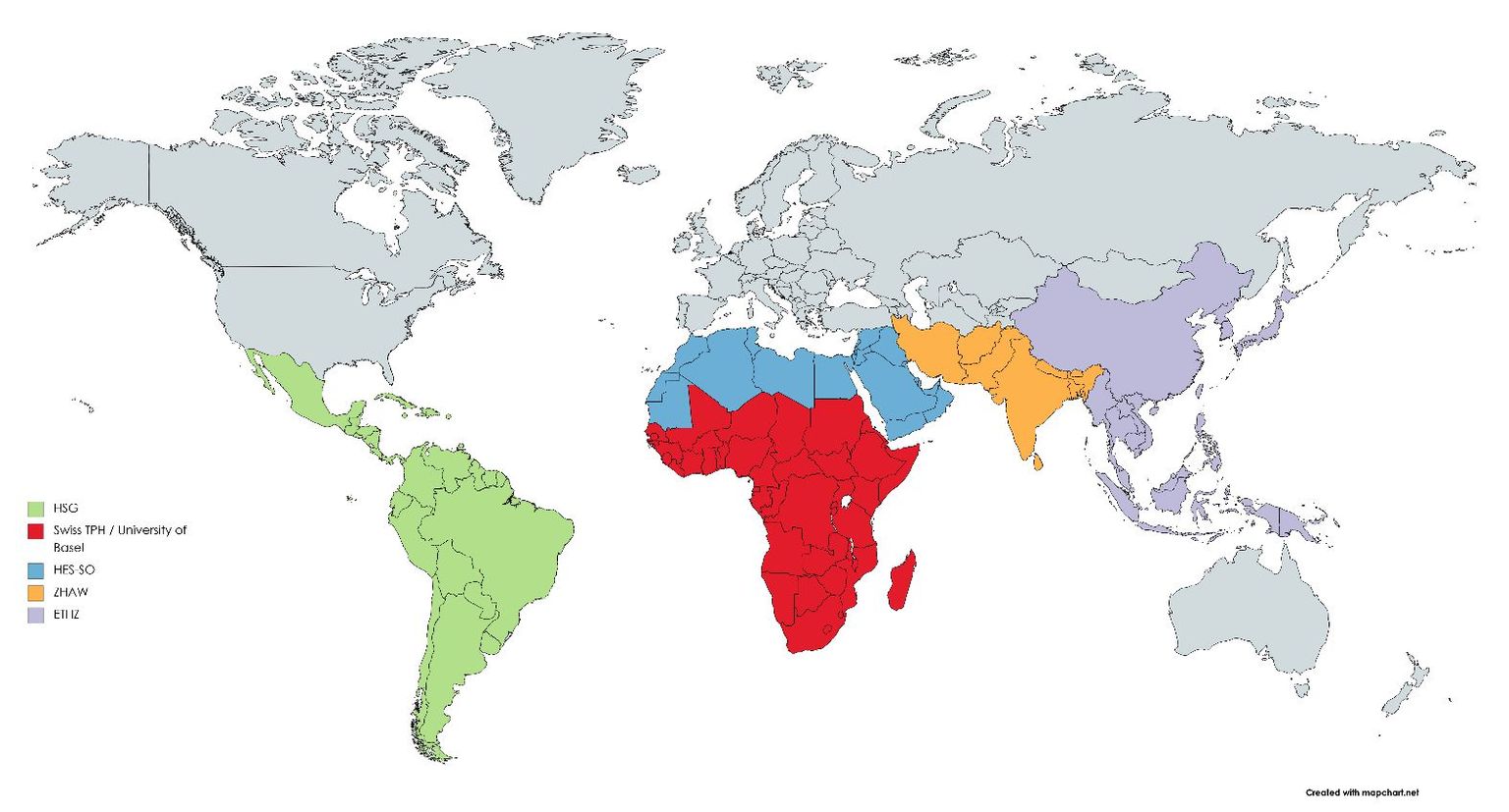
Zurich University of Applied Sciences (ZHAW)

University of St. Gallen (HSG)

University of Applied Sciences and Arts Western Switzerland (HES-SO)

University of Applied Sciences and Arts Western Switzerland (HES-SO)

University of Zurich (UZH)

In the period 2025-2028 University of Zurich takes over the Leading House Asia from ETH Zurich. At the same time the geographical focus of this Leading House is extended to Asia and Pacific.

Leading Houses
Leading Houses
Leading Houses
Leading Houses

JRPs - Joint Research Projects

SNSF JRPs enable researchers from Switzerland to address specific research questions together with researchers from partner countries. The projects are generally completed within three to four years. Similar research costs are covered under the JRPs as in SNSF project funding. The SNSF is organising the calls together with partner organisations in the respective countries. Successful projects will be jointly supported, with each organisation funding the researchers based in its own country. Calls may be launched at irregular intervals and may be limited to specific subject areas that are relevant for both the countries involved.

Partner Countries:

keyvisual-bilaterale-programme-brasilien
keyvisual-bilaterale-programme-brasilienImmagine: 2016 Marcelo Nacinovic
Immagine: 2016 Marcelo Nacinovic

The Brazilian-Swiss Joint Research Programme (BSJRP) is aimed at researchers in Switzerland who wish to address specific research questions together with partners in Brazil.

keyvisual-bilaterale-programme-china
keyvisual-bilaterale-programme-chinaImmagine: gettyimages
Immagine: gettyimages

Research cooperation with China.

keyvisual-bilaterale-programme-indien
keyvisual-bilaterale-programme-indienImmagine: gettyimages
Immagine: gettyimages

JRPs allow researchers in Switzerland to collaborate with a partner in India.

keyviusal-bilaterale-programme-suedafrika

In the context of the Swiss-South African Joint Research Programme (SSAJRP), the SNSF has launched two calls for joint research projects (JPRs) with its sister organisation in South Africa, the National Research Foundation (NRF).

Following their successful collaboration, the two funding agencies have signed a Lead Agency agreement. Joint projects can now be submitted directly to SNSF project funding or to the NRF.

keyvisual-ukraine.jpg
keyvisual-ukraine.jpgImmagine: Adobe Stock
Immagine: Adobe Stock

Joint Research Projects (JRPs) enable researchers in Switzerland to carry out joint projects together with research partners in Ukraine. The projects run for a period of two to three years, with a maximum of 250,000 francs per project available for the Swiss part. The costs that are chargeable to the grant are similar to those currently covered in national SNSF projects.

Vietnamese-Swiss Joint Research Programme
Vietnamese-Swiss Joint Research ProgrammeImmagine: SNF
Immagine: SNF

The JRPs will enable researchers in Switzerland to carry out joint projects with research partners in Vietnam. The projects will run for a period of three or four years; a maximum of 400,000 francs per project will be available for the Swiss part. The costs are similar to those currently chargeable to national project grants awarded by the SNSF.


Horizon Europe Pillar 2

Horizon Europe Pillar 2 supports collaborative research and innovation through thematic clusters that address major global challenges such as health, climate, and sustainable development. It promotes international cooperation by enabling the participation of partners from low- and middle-income countries in multinational consortia, bringing complementary expertise and local knowledge. Now that Switzerland has regained its status of Associated Country, Swiss-based entities can coordinate projects as full beneficiaries and participate as beneficiary eligible for EU funding.


Global Health EDCTP3

The Global Health European & Developing Countries Clinical Trials Partnership 3 (Global Health EDCTP3) is a European and African partnership that aims to deliver new solutions reducing the burden of infectious diseases in sub-Saharan Africa, and strengthen research capacities for preparedness and response against re-emerging infectious diseases in sub-Saharan Africa and globally.


Swissuniversities: Scholarships to study abroad

For Swiss students and researchers swissuniversities manages government scholarships of over 30 countries for study or research stays abroad.


Swiss Government Excellence Scholarships for Foreign Scholars and Artists

Logo Schweizerische Eidgenossenschaft

The Swiss Government, through the Federal commission for Scholarships for Foreign Students (FCS), awards various postgraduate scholarships to foreign scholars and researchers. The scholarships provide graduates from all fields with the opportunity to pursue doctoral or postdoctoral research in Switzerland at one of the public funded university or recognized institution.


Scientific Exchanges

Scientific Exchanges

SNSF Scientific Exchanges is aimed at researchers who want to host their own scientific event in Switzerland, invite colleagues from abroad for a research visit to Switzerland, or visit their colleagues in another country. The SNSF finances stays of up to six months.

  • Visit your research partner abroad

  • Invite researchers from abroad to Switzerland

  • Bring together a number of researchers to organise a conference in Switzerland

Running Call:

All year round (apply at least 4 months before the event or visit)


Project Funding

Projectfunding
Projectfunding
ProjectfundingImmagine: SNSF
Immagine: SNSF

The SNSF Project Funding scheme enables researchers to independently conduct research projects with topics and goals of their own choice. Applicants can apply for funding of research costs and staff salaries, as well as of scientific cooperation, networking and communication; however, they may not apply for their own salaries.

  • Project Funding can cover the costs of international exchanges.
  • You can involve a partner from abroad in your project. Project partners make a limited contribution and, unlike applicants, are not co-responsible for the project. Their research costs are covered by the project budget.

Submission deadlines: 01 April and 01 October of every year, 17:00 Swiss time

Webinar recording and slides on new regulations for project funding


Mobility grants in projects

Mobility grants are aimed at doctoral students who wish to improve their scientific profile by going abroad while being employed in an ongoing SNSF research project. During the period spent abroad, the grantee will remain matriculated at the Swiss home institution and employed as a doctoral student in the SNSF-funded research project.

Applications can be submitted anytime.


Postdoc.Mobility

SNSF Postdoc.Mobility fellowships are aimed at researchers who have done a doctorate and who wish to pursue a scientific or an academic career in Switzerland.
The fellowships include a grant for subsistence costs, a flat-rate for travel expenses and a possible contribution to research and conference costs. In addition, fellowship holders can apply for a return grant to finance their initial period of research after returning to Switzerland. The funding period is in principle 24 months (fellowship) and 3 to 12 months (return phase).

Submission deadlines: 01.02 resp. 02.08, 17:00 Swiss local time


Further SNSF Funding

SNSF has different funding instruments that are not explicitly designed for but can be used for research collaborations.

The Lead Agency process allows researchers in Switzerland and a partner country to submit a joint research proposal to either of the two national funding organisations.

SNSF has Lead Agency agreements with two LMIC:

  • State of Sao Paulo
  • South Africa

BRIDGE is a joint programme conducted by the SNSF and Innosuisse. It offers new funding opportunities at the intersection of basic research and science-based innovation, thereby supplementing the funding activities of the two organisations.

BRIDGE consists of two funding opportunities:

Proof of Concept is aimed at young researchers who wish to develop an application or service based on their research results. These projects may target innovations of all kinds from all research areas.
Discovery is aimed at experienced researchers looking for the opportunity to develop an innovative idea.

Due to Switzerland’s status as a non-associated third country in the Horizon Europe programme, the federal government mandated the SNSF to launch the funding scheme "SNSF Starting Grants 2023". This integrative call is a transitional measure covering the ERC Starting Grants 2023 as well as the former SNSF funding schemes Eccellenza and PRIMA.

Starting Grants are for researchers who want to lead an independent research project and direct a team of researchers in Switzerland.

The scheme is open to all disciplines and topics; researchers of any nationality may apply. Applicants can request a budget of up to CHF 1.8 million for a period of five years.

Ambizione grants are aimed at young researchers who wish to conduct, manage and lead an independent project at a Swiss higher education institution. The scheme supports young researchers both from Switzerland and abroad. Scientists holding non-professorial academic positions at higher education institutions are also eligible to submit an application.

Sinergia
Sinergia
Sinergia

In June 2023 Sinergia was integrated into the SNSF Programme: Project Funding. Proposals for Project Funding include now all types of collaborative projects and can be submitted by 1 October and 1 April every year.

The SNSF provides grants to finance scientific publications that are made available immediately, without restriction and free of charge (gold open access). There are three types of processing charges:

  • for articles in open access journals (article processing charges APCs)
  • for open access book publications (book processing charges BPCs)
  • for book chapters (book chapter processing charges BCPCs)

The Agora scheme aims to foster dialogue between scientists and society.

The Agora scheme aims to foster dialogue between scientists and society. It encourages researchers to communicate their current research to an audience of lay people. Agora projects have to initiate a dialogue between researchers and the public in which they interact and listen to each other.

Submission deadline:

  • running call for projects up to CHF 50'000, submission anytime
  • 10 October each year for projects up to CHF 200'000

Innosuisse

Innosuisse is the Swiss Innovation Agency. Its role is to promote science-based innovation in the interest of the economy and society in Switzerland. Innosuisse supports science-based innovation in the interest of the economy and society through innovation projects, support for start-ups, internationalisation and networking support. International tenders include collaboration within European and selected partner countries.

Innosuisse and the Empresa Brasileira de Pesquisa e Inovação Industrial (EMBRAPII) work together to support international innovation projects implemented by partners from Switzerland and Brazil. Research institutions and companies have the opportunity to submit funding applications in regular calls for proposals. This partnership boosts knowledge and technology transfer and makes both countries more competitive.

BRIDGE is a joint programme conducted by the SNSF and Innosuisse. It offers new funding opportunities at the intersection of basic research and science-based innovation, thereby supplementing the funding activities of the two organisations.

BRIDGE consists of two funding opportunities:

Proof of Concept is aimed at young researchers who wish to develop an application or service based on their research results. These projects may target innovations of all kinds from all research areas. ​
Discovery is aimed at experienced researchers looking for an opportunity to further develop an innovative idea.


FDFA Mandates

The Federal Department of Foreign Affairs (FDFA) awards mandates to contractors with subject-matter expertise, such as aid agencies, research institutions and private companies, for the implementation of specific projects and programmes, including those in the area of international cooperation (development cooperation, cooperation with Eastern Europe and humanitarian aid).

  • Mandates over CHF 230,000 are published on SIMAP, the electronic public procurement platform of the federal government.
  • Mandates below CHF 230,00 are published at the website of the FDFA.

Swiss Academy of Humanities and Social Sciences

The SAGW supports international collaboration in the humanities and social sciences. Applicants must demonstrate affiliation with a Swiss university. Nationality and place of residence are not considered in the evaluation. Applications must be submitted no later than two months before the scheduled event.

REPIC Logo
REPIC Logo
REPIC LogoImmagine: REPIC
Immagine: REPIC

REPIC

REPIC is the interdepartmental platform for the promotion of renewable energy, energy and resource efficiency in international cooperation. REPIC is partially financing new, sustainable and effective small-scale projects in Low- and Middle-Income Countries from Swiss institutions with high replication potential.


Movetia

Mandated by the federal government and the cantons Movetia finances exchange projects in the field of education. Staff of higher education institutions can develop their skills abroad by attending training in the form of courses and seminars, or by taking part in job shadowing programmes. Students have the opportunity to spend time abroad during their studies. They can choose to do an exchange semester at another university or gain work experience with a traineeship. Financial support is available both for studying and for working abroad.

SNIS Logo
SNIS Logo
SNIS LogoImmagine: SNIS
Immagine: SNIS

Swiss Network for International Studies, SNIS

The SNIS promotes academic research in the interdisciplinary area of international studies. Thematic areas of interest include environment, development, health, human rights and education.


Velux Stiftung

Velux Stiftung supports innovative research that tackles the complex challenges we face as a society with an interdisciplinary approach. Its Ophthalmology Programme specifically focuses on LMICs, but other programmes are also open for global research collaborations.


Geneva Science-Policy Interface: Impact Collaboration Programme

This annual call for projects provides funding to spot, support and scale science-policy collaborations that contribute to strengthening science-informed policy-making and build policy-relevant research and tools in support of global governance actors based in Geneva.


Nestlé Foundation

The Nestlé Foundation initiates and supports research in human nutrition with public health relevance in low-income and lower middle-income countries according to the World Bank classification.


Sight and Life

Sight and Life has recently instituted its new strategy and as such the grants (humanitarian, educational, conference grants) have been redesigned. The strategic focuses are micronutrient dietary improvement through supplementation and fortification; promoting partnerships and building capacity; and sharing knowledge for improved nutrition.


Scholars at Risk

Scholars at Risk supports Scholars at Risk. They currently provide a comprehensive overview on fellowships and resources for students and researchers from Ukraine and Afghanistan.

In collaboration with Scholars at Risk Switzerland, the SNSF is supporting placements of researchers under threat in Switzerland.


Perspectives Studies

Informations for refugees, who wish to study in Switzerland and people who support them along their way.


ThinkSwiss Research Scholarships

ThinkSwiss Research Scholarships is a program that opens doors for students from India, Singapore and Australia to the world of Swiss academia. The scholarship accepts students who have completed their 2nd year of graduation or post-graduation, while being enrolled with an Indian, Singaporean or Australian university.


Funding by different Universities

ETH4D Research Challenges

The goal of the ETH4D Research Challenges is to enable collaborations on project-​based research between ETH researchers, non-​academic partners and partners from low- and lower-middle ​income countries to develop effective solutions for poverty reduction.

ETH4D Pilot Grants

ETH4D Pilot Grants provide a smaller amount of funding to explore new collaborations, pilot a new applied research project or scale up existing research projects in low- and lower-middle income countries.


ETH4D Humanitarian Action Challenges

The goal of the ETH4D Humanitarian Action Challenges is to enable collaborations on project-​based research between ETH researchers and the International Committee of the Red Cross (ICRC) or other humanitarian actors in Switzerland to develop innovative solutions to increase the impact of humanitarian action.


ETH4D Research to Action Grants

The ETH for Development (ETH4D) “Research to Action Grant” aims to ensure that research results are being used, implemented, and disseminated. It supports ETH Zurich bachelor students, master students, doctoral students, post-​docsand senior scientists to develop prototypes, explore opportunities for entrepreneurship and discuss their work with practitioners. The grant sum is up to 5 kCHF.

Four application deadlines per year: 30 April, 30 June, 31 October and 31 December


ETH4D Doctoral Scholarships

The goal of the Engineering for Development (E4D) Programme is to promote research and education for people in low-​income countries. The programme supports doctoral students from low-​ and middle-​income countries to work on innovations at ETH that have the potential to improve the lives of people in poor and fragile regions.


ETH4D Faculty Exchange Grants

allow ETH scientists to bring collaborators from the Global South to ETH Zurich for a research stay or a workshop/conference attendance.
fund ETH scientists to travel to partner institutions in the Global South for lectures, courses and collaboration meetings.


ETH4D Doctoral Mentorship Programme

The mentorship entails remote support of doctoral students in low-​ and lower-​middle-income countries as well as a research stay of 1-3 months at ETH Zurich.


E4D Doctoral Scholarship Programme

The Engineering for Development (E4D) doctoral scholarships promote doctoral research for the benefit of underprivileged people in low-​income countries.


E4D Continuning Education Scholarship Programme

The Engineering for Development (E4D) Continuing Education Scholarship Programme awards scholarships for travel and living expenses to candidates from low-​income countries to attend continuing education programmes at ETH Zurich.


Excellence Scholarship & Opportunity Programme of the ETH Zürich

ETH Zurich supports excellent Master's students (no MAS) with the following scholarship programme:

  • The Excellence Scholarship & Opportunity Programme (ESOP) supports students with a scholarship, mentorship and a network of the ETH Foundation. The scholarship covers the full study and living costs during the Master’s degree course.

Collegium Helveticum fellowships

The Collegium Helveticum is the joint Institute for Advanced Studies (IAS) of the ETH Zurich, the University of Zurich, and the Zurich University of the Arts. The fellowship program seeks to promote exchange and collaboration across disciplinary boundaries. The fellowship program is open to applicants from all academic and artistic disciplines. Depending on the fellowship type, fellows either receive a grant equivalent to full salary or a financial allowance to support them in their work for the duration of their fellowship.

Tech4Dev

The Tech4Dev research activities consist of calls for collaborative research projects between Non-Governmental Organisations (NGOs) and EPFL researchers.


Science and Technology for Humanitarian Action Challenges (HAC)

The goal of the Science and Technology for Humanitarian Action Challenges is to support project-based research between EPFL researchers, ETH Zurich researchers, and the ICRC to develop effective solutions for a greater impact of humanitarian action.

Currently no open call


Excellence in Africa - Junior Faculty Development Programme

The JFD programme fosters collaborations between Africa-based young professors and EPFL professors on projects addressing African and global challenges.

Currently no open call.


Fellowship Programmes by the EPFL

Doctoral fellowship programme funding early stage researchers to become leaders in the transition towards sustainable societies.

Next application deadline: Currently no open call.

EPFL and the Cyber-Defence Campus “CYD Fellowships” to promote research and education in cyber-defence.

Kanton Basel Stadt: Stipendienkommission für Nachwuchskräfte aus Entwicklungsländern

Unterstützt wird während maximal dreier Jahren (in der Regel 1-2 Jahre) die Ausbildung von Studierenden und anderen Nachwuchskräften aus Entwicklungsländern in Basel. In erster Linie werden Dissertationen und Post-Docs gefördert. Einreichefrist für Gesuche: jeweils 31. März und 30. September. Der Antrag kann nur von der betreuenden Person eingereicht werden.

Stipendienkommission für Nachwuchskräfte aus Entwicklungsländern

Stipendienkommission für Nachwuchskräfte aus Entwicklungsländern
c/o Amt für Ausbildungsbeiträge
Holbeinstrasse 50
Postfach
4001 Basel

Telefon: 061 267 17 41

Conference Support

The Faculty of Science supports the participation of members of the lower Mittelbau (PhD students matriculated at the Faculty of Science and Postdocs) at International Meetings (Symposia, Conferences, Workshops, Summer schools, etc.) to promote their scientific education and to allow them to create their own scientific networks. Precedence will be given to people who can show that they have no other sources to finance the participation in the meeting.

Grants are awarded three times a year: 31 of March, 30 of June and 31 of October


Funding Program «UniBE Short Travel Grants for (Post)Docs»

The University of Bern, by way of its «UniBE Short Travel Grants for (Post)Docs» funding program, supports short research stays abroad for doctoral students and postdoctoral researchers that enable early career researchers to advance their own research projects, gain more experience abroad and thus improve their academic profile.

Application deadlines are on the 1st of March and 1st of September.


Genomics for Health in Africa Scientific Exchange

The Africa-Europe Cluster of Research Excellence-Genomics for Health in Africa is a collaborative research, training, and teaching initiative involving academic partners from both Africa and Europe. To facilitate scientific exchanges among GHA research groups, particularly among their early-career/non-tenured members, the consortium has dedicated resources for short research visits lasting up to 90 days. These visits aim to enhance capacity training and teaching for early-career researchers based in Africa and Europe, focusing on rare diseases/familial syndromes or infectious diseases. Please note, that at the moment this opportunity is limited to participating institutions within the CoRE-GHA consortium.


Initiative Afrique

The Initiative Afrique Fellowships funding scheme is aimed at researchers planning to invite colleagues from African institutions for a research visit to the University of Bern, or visit their colleagues in African institutions. This scientific exchange program is restricted only to researchers from the University of Bern and their African partners. Deadline: 31.01.2026

Scholarships by the University of Fribourg


Master, and research stay of max. 6 months for PhDs and max. 3 months PostDoc

Grants and financial aid by the University of Geneva

Scholarships by the University of Lausanne: UNIL's Master's grant


To facilitate access to Master’s degrees by students with qualifications from foreign universities, the University of Lausanne makes available around ten Master’s grants which are awarded on a competitive basis.

Scholarships & Financial Assistance by the Graduate Institute Geneva


A significant number of scholarships are awarded each year to students attending the Master and PhD programmes.

Contatto

SCNAT
Swiss Alliance for Global Research Partnerships (GRP-Alliance)
Casa delle Accademie
Casella postale
3001 Berna


Further collections of funding opportunities

Research.swiss is a centralised platform showcasing scientific and technological cooperation opportunities between Switzerland and the rest of the world.

International calls published via the State Secretary for Education Research and Innovation (SERI).

Euresearch promotes and facilitates the participation of researchers, organisations and companies in Switzerland in European projects and programmes related to research and innovation. The organisation provides information and guidance on cooperation and funding opportunities.

The Sustainability Research Initiative provides a comprehensive overview on funding opportunities for

  • research
  • application and implementation
  • knowledge transfer, knowledge exchange and science communication
  • training and capacity building

SFIAR provides an overview on current calls in the area of agricultural research for development, relevant for researchers based in Switzerland.

Swissnex India publishes open calls for collaboration opportunities between Swiss and Indian stakeholders.

SARECO.org is a database for information on collaborative research between Switzerland and African countries. SARECO does not offer own funding, but can help you during your search for research partners, collaborative institutions or funding instruments.

The establishment of the SARECO database underpins the idea of bringing early career scientists (PHDs and Postdoc researchers) together and to create a framework for exchange about funding instruments and project success stories, inviting peers to follow and by that to grow the Swiss – African research network.


If you are a research funder and wish to promote your funding instrument at our website, please let us know: